
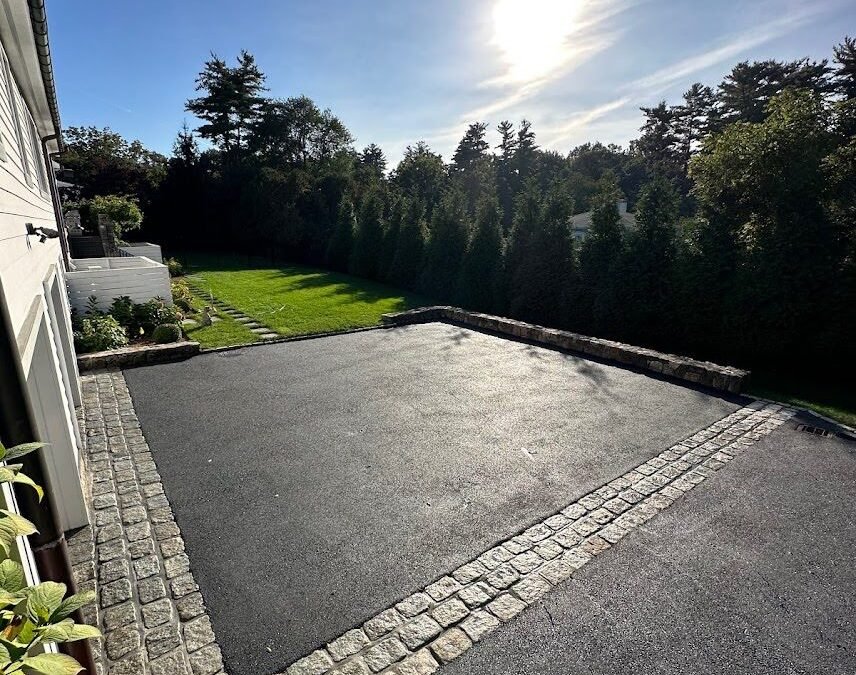
Choosing the right driveway for a Morristown, NJ property is not just about picking a material and calling a contractor. Your decision affects curb appeal, long-term maintenance costs, and how well the surface holds up through Morris County’s harsh winters. With asphalt, concrete, pavers, and permeable options all on the table, the differences in price, durability, and local building rules matter more than most homeowners realize.
Driveways in Morristown, NJ face specific challenges, from freeze-thaw damage and heavy road salt use to the town’s impervious coverage limits and historic district regulations. This guide walks through every factor that shapes a smart driveway decision in this part of northern New Jersey, including honest cost comparisons, material performance in local conditions, and what permits you may need before breaking ground.
Why Morristown Driveways Face Unique Challenges
Morristown sits in the heart of Morris County at an elevation of roughly 400 feet, with clay-heavy soil that drains poorly and shifts seasonally. The town receives an average of 50 inches of precipitation and 25 to 30 inches of snowfall each year, which means driveways here endure constant freeze-thaw cycling from November through March. Road salt, widely used on Morristown’s streets and applied by homeowners on their own driveways, accelerates surface damage on concrete and weakens asphalt binder over time.
Many Morristown properties also sit on rolling terrain with moderate slopes. A driveway that works perfectly on a flat lot in central New Jersey may wash out or become dangerously slippery on a graded Morristown lot without proper drainage design. These local conditions make material selection, base preparation, and drainage planning more important here than in flatter, milder parts of the state.
Comparing Driveway Materials: Asphalt, Concrete, and Pavers
Every driveway material has trade-offs. The right choice depends on your budget, how long you plan to stay in the home, and what your property’s layout demands. Here is how the three most common options compare for Morristown homeowners.
Asphalt remains the most popular driveway surface in Morris County for good reason. It flexes with ground movement instead of cracking, which is a real advantage in a climate with dozens of freeze-thaw cycles each winter. A properly installed asphalt driveway lasts 15 to 20 years with regular sealcoating. It is also the most affordable option, costing $7 to $13 per square foot installed in the Morristown area. The main drawback is maintenance: asphalt needs sealcoating every 2 to 3 years and can soften in extreme summer heat.
Concrete offers a longer lifespan of 30 to 40 years and comes in plain, stamped, or stained finishes. It costs $8 to $18 per square foot in Morris County, with decorative finishes pushing toward the higher end. Concrete is low maintenance compared to asphalt, but it is more vulnerable to salt damage and surface spalling in cold climates. Cracks in concrete are also harder and more expensive to repair than asphalt cracks.
Interlocking pavers (concrete, brick, or natural stone) are the premium option, running $12 to $30 per square foot depending on material and pattern. Pavers last 25 to 50 years and individual units can be replaced if damaged, making long-term maintenance straightforward. They also offer the best curb appeal, which matters in a town like Morristown where property values and neighborhood aesthetics are high. The downside is a higher upfront cost and longer installation time, typically 3 to 5 days.
Driveway Cost Breakdown for Morristown, NJ
Driveway costs in Morristown run higher than national averages because of the region’s labor rates, material transport costs, and the site preparation that clay-heavy soil often requires. The table below shows estimated costs for a standard 600-square-foot residential driveway in the Morristown area as of 2026.
| Material | Cost per Sq Ft | Total (600 Sq Ft) | Lifespan |
|---|---|---|---|
| Asphalt (new) | $7 to $13 | $4,200 to $7,800 | 15 to 20 years |
| Asphalt (resurface) | $3 to $7 | $1,800 to $4,200 | 8 to 12 years |
| Concrete (plain) | $8 to $14 | $4,800 to $8,400 | 30 to 40 years |
| Concrete (stamped) | $12 to $18 | $7,200 to $10,800 | 25 to 35 years |
| Concrete pavers | $12 to $25 | $7,200 to $15,000 | 25 to 50 years |
| Natural stone pavers | $20 to $30 | $12,000 to $18,000 | 40 to 75+ years |
| Permeable pavers | $15 to $30 | $9,000 to $18,000 | 25 to 50 years |
These estimates include standard excavation, gravel base, and installation. Add $1,000 to $3,000 for old surface removal, and $500 to $2,000 for drainage modifications if your lot slopes toward the house or the street. Heated driveway systems add $12 to $25 per square foot on top of the base material cost.
How Base Preparation Affects Driveway Longevity in Morris County
The most common reason driveways fail prematurely in the Morristown area is poor base preparation. Morris County’s clay soil holds water and expands when it freezes, lifting and cracking any surface that sits on a shallow or poorly compacted base.
A quality driveway installation in this region starts with excavating 8 to 12 inches of soil, then laying and compacting a gravel sub-base in lifts. The sub-base should be a minimum of 6 inches of crushed stone (typically NJDOT dense-graded aggregate) compacted to 95 percent density. For paver driveways, a 1-inch layer of bedding sand goes on top of the compacted gravel before the pavers are set.
Contractors who skip proper compaction or use a thin base to cut costs are setting the driveway up for settling, cracking, and water pooling within just a few years. Always ask a contractor what base depth and compaction standard they use, and be cautious of bids that come in significantly below the cost ranges above.
Morristown Permit and Zoning Rules for Driveways
Replacing an existing driveway surface in the same footprint, such as repaving asphalt over old asphalt, typically does not require a permit in Morristown. However, several situations do trigger the need for town approval.
You will likely need a permit or engineering review if you plan to expand the driveway’s footprint, which increases impervious surface coverage on the lot. Morristown’s zoning code sets maximum impervious coverage ratios by zone, and adding driveway area may push a property over its limit. Changing the location or width of a curb cut, which is the point where the driveway meets the public street, requires approval from the Town of Morristown Engineering Department.
Properties located in the Morristown Historic District may face additional review by the Historic Preservation Commission, particularly if the driveway change is visible from the street and involves a shift in material or layout that affects the property’s historic character.
New Jersey also requires homeowners to use a licensed contractor registered with the NJ Division of Consumer Affairs Home Improvement Contractor program for driveway projects exceeding $500 in value. Always verify a contractor’s HIC registration number before signing a contract.
Drainage and Stormwater Considerations
Morris County enforces stormwater management rules that affect driveway projects, especially on properties where runoff flows toward neighboring lots or public infrastructure. If your driveway installation increases impervious coverage on the property, you may need to incorporate stormwater mitigation measures such as a French drain, dry well, or permeable paving surface.
Permeable pavers, porous asphalt, and pervious concrete allow rainwater to infiltrate through the surface rather than running off into storm drains. These materials are encouraged in Morristown because they reduce the volume of stormwater reaching the town’s aging drainage system. Using permeable materials can also help homeowners stay within impervious coverage limits, which is useful if you want a wider or longer driveway without triggering a zoning variance.
Proper grading is equally important. A driveway should slope at least 1 percent away from the house and garage to prevent water from pooling against the foundation. On sloped lots, channel drains or trench drains across the driveway width can redirect water before it reaches the garage door.
Best Driveway Options for Sloped Morristown Properties
Morristown’s hilly terrain means many homeowners deal with moderate to steep driveway grades. Smooth asphalt on a steep slope becomes hazardous in winter, even with salt treatment. Here are better options for graded driveways.
Interlocking pavers with a textured surface provide natural traction and resist sliding. A soldier course border, which is a row of pavers laid perpendicular along the edges, locks the field pavers in place and prevents shifting on slopes. Exposed aggregate concrete, which has a rougher texture than standard broom-finished concrete, also offers improved grip without the maintenance burden of pavers.
For steep grades exceeding 8 percent, consider adding cross-slope drainage channels every 15 to 20 feet to prevent water from gaining speed and eroding the driveway edges. A heated driveway system embedded under the surface eliminates the need for plowing and salt on steep grades entirely, though the installation cost is significant.
Heated Driveways: Are They Worth It in Morristown?
Heated driveway systems use electric radiant mats or hydronic tubing installed beneath pavers, concrete, or asphalt to melt snow and ice automatically. They are growing in popularity across Morris County because they eliminate plowing, shoveling, and salt application, all of which shorten a driveway’s lifespan.
The cost to add a heated system is $12 to $25 per square foot on top of the driveway material itself. For a 600-square-foot driveway, that adds $7,200 to $15,000. Operating costs vary with electricity rates, but most Morristown homeowners report spending $100 to $300 per season to run the system during snowfall events only (using a sensor-activated controller rather than continuous operation).
Heated driveways make the most financial sense for homes with steep driveways that are expensive and difficult to plow, properties where salt damage to landscaping is a concern, or homeowners who want to reduce long-term maintenance costs on a premium paver or concrete surface.
Choosing Between Driveway Repair and Full Replacement
Not every driveway problem calls for a tear-out and replacement. Understanding when to repair and when to replace can save thousands of dollars.
Repair makes sense when the damage is limited to surface cracks, small potholes, or faded sealcoating on an asphalt driveway under 15 years old. Crack filling costs $100 to $400, patching runs $200 to $800, and sealcoating a full driveway costs $200 to $500 in the Morristown area. For concrete, isolated cracks can be filled with polyurethane caulk, and surface staining can be ground down and resurfaced.
Replacement is the better investment when the base has failed, meaning the driveway has widespread settling, alligator cracking across large areas, or standing water that does not drain. These problems indicate that the sub-base was inadequate or has deteriorated, and paving over a bad base only delays the same failure by a few years. A full replacement also makes sense when the driveway is older than 20 years (asphalt) or 35 years (concrete) and shows signs of structural failure.
How to Evaluate Driveway Contractors in Morristown
The contractor you choose matters as much as the material you pick. A well-installed economy driveway will outlast a premium surface laid on a poor base every time. Here is what to look for when comparing contractors for driveway work in the Morristown area.
Start with licensing. Every driveway contractor in New Jersey must be registered with the NJ Division of Consumer Affairs as a Home Improvement Contractor. Ask for the HIC registration number and verify it online. Confirm the contractor carries general liability insurance of at least $500,000 and workers’ compensation coverage for their crew.
Ask for at least three references from driveway projects completed in Morris County within the last two years. Look at projects similar in scope to yours, whether that is a simple asphalt overlay or a full paver installation with drainage work. Drive by the finished driveways if possible to see how they are holding up.
Get written estimates from at least three contractors, and make sure each bid specifies the same scope: excavation depth, base material and thickness, surface material and thickness, drainage work, and cleanup. The lowest bid is not always the best value. A contractor who quotes a 4-inch gravel base when local conditions call for 6 to 8 inches is cutting corners that will cost you later.
Why Morristown Homeowners Choose Pavement Specialists Inc.
Pavement Specialists Inc. is a locally trusted paving and masonry contractor serving Morristown and the surrounding Morris County communities. The company brings hands-on experience with the specific soil conditions, drainage challenges, and municipal requirements that affect driveway projects in this area.
Pavement Specialists handles every phase of driveway work, from asphalt driveway installation and resurfacing to paver driveway design and construction. The team also provides driveway repair services including crack sealing, patching, and sealcoating to extend the life of existing surfaces.
Beyond driveways, the company’s masonry division builds retaining walls, walkways, patios, and stoops and steps, making it a single-source solution for homeowners who want their driveway project to tie into a larger hardscape plan. Request a free estimate to discuss your Morristown driveway project.
Seasonal Maintenance Tips for Morristown Driveways
A driveway in Morristown takes a beating year-round. Following a seasonal maintenance routine adds years to any surface.
Spring: Inspect for cracks and potholes created by winter freeze-thaw cycles. Fill asphalt cracks before they widen during summer heat. Power wash the surface to remove salt residue, which continues to damage both asphalt and concrete even after temperatures rise.
Summer: Schedule sealcoating for asphalt driveways. The warm, dry weather from June through September gives the sealant time to cure properly. Address any drainage issues before fall rains begin.
Fall: Clear leaves and debris that trap moisture against the surface. Check that all drainage channels and dry wells are clear before winter. Apply a final round of weed treatment in paver joints.
Winter: Use calcium magnesium acetate or potassium chloride instead of rock salt, which is harsher on both concrete and asphalt. Avoid metal-blade snow shovels on paver surfaces. If you hire a plow service, confirm they set the blade height to avoid scraping the surface.
Driveway Design Ideas That Add Value to Morristown Homes
A well-designed driveway does more than park cars. In a town like Morristown, where home values range from $400,000 to over $1 million, a thoughtfully planned driveway contributes to both curb appeal and property value.
A paver driveway with a contrasting border pattern creates a polished look that complements colonial and craftsman-style homes common in Morristown neighborhoods. Exposed aggregate concrete with earth-tone aggregates blends well with stone facades. For homes in the historic district, a cobblestone or tumbled-paver apron at the street edge maintains the neighborhood’s traditional aesthetic.
Incorporating walkway connections from the driveway to the front door and side yard creates a cohesive hardscape that functions better and looks intentional. Adding low-voltage landscape lighting along the driveway edges improves safety and visibility while highlighting the investment.
Widening a driveway to include a turnaround area eliminates the need to back into busy Morristown streets, which is a practical upgrade that appeals to future buyers. A circular or hammerhead turnaround requires roughly 200 to 300 additional square feet of paved surface.
Frequently Asked Questions About Driveways in Morristown, NJ
What is the best driveway material for Morristown, NJ homes?
Asphalt is the most popular driveway material in Morristown because it handles freeze-thaw cycles well and costs less upfront than concrete or pavers. However, concrete pavers offer better curb appeal and last 25 to 50 years with minimal maintenance. The best choice depends on your budget, the slope of your lot, and whether your property falls within the Morristown Historic District.
How much does a new driveway cost in Morristown, NJ?
A new asphalt driveway in Morristown costs roughly $7 to $13 per square foot installed, putting a 600-square-foot driveway between $4,200 and $7,800. Concrete runs $8 to $18 per square foot, and interlocking pavers range from $12 to $30 per square foot depending on material and pattern. Site grading, drainage work, and old surface removal can add $1,000 to $3,000.
Do I need a permit for a new driveway in Morristown?
Repaving an existing driveway in the same footprint typically does not require a permit in Morristown. Expanding the driveway, changing its shape, adding impervious surface, or modifying a curb cut requires approval from the Town of Morristown Engineering Department. Properties in the Morristown Historic District may also need Historic Preservation Commission review for visible changes to the property.
How long does a driveway installation take in Morristown?
A standard asphalt driveway installation in Morristown takes 1 to 3 days, including base preparation and paving. Concrete driveways require 2 to 4 days for pouring plus 7 days of cure time before vehicle traffic. Paver driveways typically take 3 to 5 days for excavation, base compaction, and laying the pavers. Weather delays are common during Morris County’s rainy spring months.
Is asphalt or concrete better for driveways in northern New Jersey?
Asphalt is generally better for northern New Jersey driveways because it flexes with freeze-thaw movement instead of cracking. Concrete lasts longer, typically 30 to 40 years compared to 15 to 20 for asphalt, but it is more vulnerable to salt damage and surface spalling in cold climates. Asphalt also costs 30 to 50 percent less to install than concrete in the Morris County area.
When is the best time of year to pave a driveway in Morristown?
Late spring through early fall, roughly May to October, is the best window for driveway paving in Morristown. Asphalt requires air temperatures above 50 degrees Fahrenheit for proper compaction. Concrete should not be poured when overnight temperatures drop below 40 degrees. Scheduling in late spring or early summer also avoids the fall rush when most Morris County contractors are booked.
How often should an asphalt driveway be sealed in Morristown?
Seal an asphalt driveway every 2 to 3 years in Morristown to protect against water infiltration, UV damage, and the road salt used heavily during Morris County winters. Wait at least 6 months after a new installation before the first sealcoat application. A professional sealcoating job on a standard Morristown driveway runs $200 to $500 depending on size and condition.
Can I install a heated driveway in Morristown, NJ?
Yes, heated driveways are an option in Morristown and are growing in popularity across Morris County. Electric radiant mats or hydronic tubing installed beneath pavers or concrete melt snow and ice automatically. Installation adds $12 to $25 per square foot to the project cost. Operating costs depend on electricity rates, but the system eliminates the need for plowing and salt, which reduces long-term surface damage.
What driveway materials work best on sloped lots in Morristown?
Many Morristown properties sit on rolling terrain with moderate slopes. Interlocking concrete pavers or textured concrete provide better traction on graded driveways than smooth asphalt. For steep grades, a paver driveway with a soldier course border and proper drainage channels prevents washout. Permeable pavers also help manage stormwater runoff on sloped lots, which matters under Morris County stormwater rules.
Are permeable driveways allowed in Morristown, NJ?
Permeable driveways are allowed and encouraged in Morristown because they reduce stormwater runoff. Permeable pavers, porous asphalt, and pervious concrete all qualify. Using permeable materials can help properties stay within impervious coverage limits set by local zoning, which is especially useful for homeowners looking to expand a driveway without triggering additional engineering reviews.