
Parsippany-Troy Hills covers more than 25 square miles of Morris County, with neighborhoods ranging from lakefront properties around Lake Parsippany and Lake Hiawatha to suburban developments along the Route 10 and Route 46 corridors. That mix of terrain, soil types, and architectural styles means walkway projects here require more than a one-size-fits-all approach. Whether you are replacing a cracked concrete path to your front door, adding a paver walkway through a backyard garden, or connecting a patio to a pool deck, this guide covers the materials, costs, permits, and installation details that Parsippany homeowners need to make informed decisions.
Professional walkway services in Parsippany, NJ typically include site evaluation, base preparation, material selection, installation, and sealing. The best contractors also address drainage, grading, and ADA-compliant slope design when the walkway connects to public sidewalks or commercial entrances. Costs for a standard residential walkway range from $6 to $50 per square foot depending on material, with most Parsippany projects falling between $1,400 and $4,600 for a typical front entry path.
What Types of Walkway Materials Work Best in Parsippany?
Northern New Jersey’s freeze-thaw cycles, clay-heavy soil pockets, and seasonal rainfall all influence which materials perform best over time. Here is how the most popular walkway options compare for Parsippany properties.
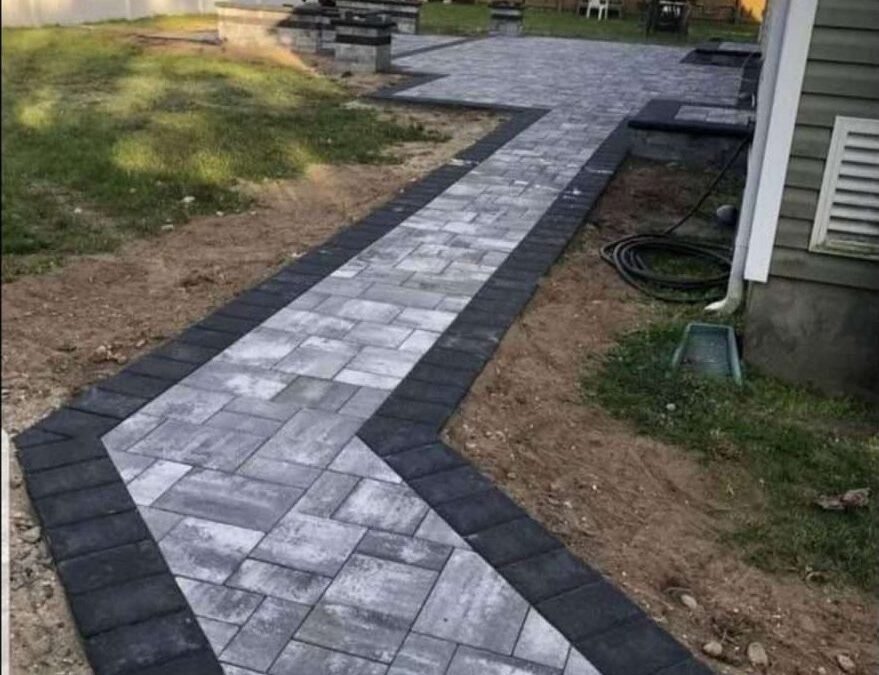
Concrete pavers are the most popular choice for residential walkways in Morris County. Made from molded concrete in a range of colors, shapes, and textures, they cost $8 to $15 per square foot installed. Concrete pavers interlock on a compacted aggregate base, which allows individual units to be replaced if one cracks or stains. Brands like Cambridge, Belgard, and Unilock are widely available from local suppliers. A well-installed concrete paver walkway lasts 25 to 50 years with minimal maintenance.
Brick pavers offer a classic look that suits many of Parsippany’s established neighborhoods. Clay brick costs $10 to $20 per square foot installed and delivers a warm, traditional aesthetic. Brick is slightly more porous than concrete, so it benefits from periodic sealing in New Jersey’s wet climate. With proper installation and maintenance, brick walkways can last 100 years or more.
Natural stone is the premium option and the most visually striking. Bluestone, flagstone, travertine, and granite range from $12 to $50 per square foot installed, depending on the stone type and cut. Bluestone is the most popular natural stone for walkways in the Northeast, prized for its blue-gray color and natural cleft texture. Irregular flagstone creates a more rustic appearance and works well in garden paths, while cut stone offers clean lines for formal entry walks.
Poured concrete is the most affordable structural option at $6 to $12 per square foot. It provides a smooth, uniform surface that works well for long, straight paths and ADA-accessible routes. Stamped concrete ($8 to $28 per square foot) mimics the look of stone or brick at a lower cost. The tradeoff is that concrete can crack during New Jersey’s freeze-thaw cycles, and repairs are more visible than with individual pavers.
Permeable pavers are gaining popularity in Parsippany, especially on properties near Lake Parsippany and Lake Hiawatha where stormwater management is a priority. These pavers allow rainwater to filter through gaps into a gravel reservoir below, reducing runoff and helping meet local stormwater regulations. Permeable paver systems cost $12 to $25 per square foot installed and qualify for green infrastructure incentives in some Morris County municipalities.
How Much Do Walkway Services Cost in Parsippany, NJ?
Walkway costs in Morris County run slightly above national averages due to higher labor rates and the prevalence of custom stone work. Here are typical 2026 cost ranges based on data from LawnStarter, LawnLove, and regional contractor estimates.
A standard concrete walkway (35 feet long, 4 feet wide) costs approximately $1,260 installed. The same walkway in concrete pavers runs about $2,030. Natural stone or bluestone raises the price to $2,500 to $4,500 or more depending on the stone and pattern.
Labor rates for walkway installation in northern New Jersey average about $75 per hour. Additional costs include grading ($0.08 to $2.00 per square foot for sloped sites), removal of existing concrete or asphalt ($0.30 to $0.50 per square foot), material delivery (about $0.50 per square foot for pavers), and permits ($200 to $1,000 depending on the scope).
For a full breakdown by project size, a 20-foot entry walkway at 4 feet wide costs roughly $720 in concrete, $1,160 in pavers, or $1,500 to $3,000 in natural stone. A longer 70-foot path from a driveway to a backyard patio runs $2,520 in concrete, $4,060 in pavers, or $5,000 to $8,000 in stone.
Base Preparation: Why It Makes or Breaks Your Walkway
The single most important factor in walkway longevity is the base beneath the surface material. In Parsippany, where soil conditions vary from sandy loam near the lakes to dense clay in the hillier areas around Mount Tabor and Troy Hills, proper base preparation prevents settling, heaving, and cracking.
A standard walkway base starts with excavation to a depth of 8 to 10 inches below the finished grade. The excavated area is then filled with 4 to 6 inches of compacted crushed stone aggregate (typically 3/4-inch processed gravel), followed by 1 inch of leveling sand or stone dust. Each layer is compacted with a plate compactor to at least 95% density.
For areas with poor drainage or heavy clay soil, adding a layer of geotextile fabric between the subgrade and the aggregate prevents soil migration into the base and extends the walkway’s life by a decade or more. Properties with high water tables or seasonal flooding should also include a perforated drain pipe at the base to redirect groundwater away from the walkway structure.
Skipping base preparation is the leading cause of walkway failure. A walkway laid directly on topsoil or an insufficient base will develop uneven spots, trip hazards, and structural cracks within two to five years. Proper base work adds $2 to $4 per square foot to the project cost but prevents repairs that would cost far more down the line.
Drainage and Grading for Parsippany Properties
Parsippany-Troy Hills sits in the Passaic River watershed, and many residential lots in the township have drainage challenges that directly affect walkway design. Properties along Vail Road, Smith Field, and the Lake Hiawatha basin are especially prone to standing water after heavy rain.
Every walkway should slope away from the house at a minimum grade of 1/4 inch per foot (a 2% slope). This pitch is gentle enough to walk on comfortably but steep enough to move water off the surface. For longer walkways, a cross-slope or a subtle crown along the centerline directs water to both sides.
Where a walkway crosses a low point or runs parallel to a foundation wall, a channel drain or trench drain collects surface water and routes it to a dry well or storm drain connection. In Parsippany, connecting to the municipal storm system requires approval from the Department of Public Works. For smaller projects, a dry well or rain garden at the walkway’s terminus handles runoff without a permit.
Do You Need a Permit for Walkway Work in Parsippany?
Parsippany-Troy Hills requires building permits for hardscape projects that alter the grade of a property, affect drainage patterns, or connect to public infrastructure. The township’s Building and Construction Department handles permit applications.
In practice, most residential walkway replacements on an existing footprint do not require a permit. New walkway installations, especially those that change the impervious surface coverage of a lot, may trigger a permit requirement. Parsippany’s zoning code, available through Zoneomics, sets maximum lot coverage ratios that vary by zone. Adding a 200-square-foot walkway to a property that is already near its coverage limit could require a variance.
Commercial walkway projects, ADA upgrades, and any work that connects to public sidewalks always require permits. Your contractor should confirm permit requirements during the initial site evaluation and handle the application process as part of the project scope.
Paver Patterns and Design Options
The pattern in which pavers are laid affects both the walkway’s appearance and its structural performance. Running bond (a brick-like staggered pattern) is the simplest and most cost-effective layout. Herringbone, laid at either 45 or 90 degrees, creates a stronger interlock and resists shifting under foot traffic better than any other pattern, making it ideal for high-traffic entry walks.
Basket weave uses pairs of pavers set at right angles and works well for traditional or colonial-style homes common in Parsippany’s older neighborhoods. Random ashlar combines multiple paver sizes in a staggered pattern for a natural stone look. Circular and fan patterns create focal points at walkway intersections or entry areas but cost 15% to 25% more in labor due to the cutting required.
Edge restraints are essential regardless of the pattern. Aluminum, plastic, or concrete edging holds pavers in place and prevents lateral spreading. Without edge restraints, pavers shift outward over time and joints open up, allowing weeds and ant colonies to establish. Polymeric sand, swept into the joints and activated with water, further stabilizes the surface and inhibits weed growth.
Walkway Lighting and Safety
Adding low-voltage LED lighting to a walkway improves safety and curb appeal, both of which matter in Parsippany’s competitive real estate market. Path lights placed every 6 to 8 feet along the walkway edges provide sufficient illumination without creating glare. Bollard-style fixtures, recessed step lights, and in-ground uplights offer alternatives for different architectural styles.
A basic low-voltage LED path lighting system for a 40-foot walkway costs $500 to $1,500 installed, including the transformer, wiring, and fixtures. Solar-powered path lights cost less upfront ($10 to $40 per fixture) but provide inconsistent illumination during New Jersey’s shorter winter days and cloudy stretches.
For commercial properties and walkways that serve as primary access routes, Parsippany’s building code requires minimum lighting levels and ADA-compliant contrast marking at grade changes. A licensed electrician should handle any hardwired lighting installation.
Maintaining Your Walkway in New Jersey’s Climate
Northern New Jersey’s climate subjects walkways to freeze-thaw cycles from November through March, heavy summer rain, and seasonal leaf and pollen buildup. Regular maintenance extends walkway life and keeps the surface safe.
Sweep pavers and stone surfaces regularly to prevent organic debris from staining or retaining moisture. Apply a breathable penetrating sealer every two to three years for natural stone and brick. Avoid film-forming sealers on outdoor surfaces because they trap moisture that expands during freezing, causing spalling and surface damage.
For winter maintenance, use calcium magnesium acetate (CMA) or sand for traction on paver and stone walkways. Rock salt (sodium chloride) is effective but can damage concrete pavers, discolor natural stone, and harm adjacent plantings. Potassium chloride and magnesium chloride are less damaging alternatives but cost more per application.
Inspect joints annually and reapply polymeric sand where it has washed out or settled. Reset any pavers that have shifted or heaved during winter. Catching these minor issues early costs under $100, while ignoring them leads to trip hazards and structural problems that require a professional repair at $500 or more.
Why Pavement Specialists Inc. Is the Right Choice for Parsippany Walkway Projects
Pavement Specialists Inc. serves Parsippany-Troy Hills and communities across Morris County from their nearby Parsippany base. The company handles walkway design and installation, paving, masonry, and repair services for residential and commercial properties.
What separates Pavement Specialists from other contractors in the area is a combination of local knowledge and thorough project execution. Every walkway project starts with a free on-site consultation that includes soil assessment, drainage evaluation, and a detailed written proposal covering materials, dimensions, timeline, and cost. The team understands Parsippany’s specific challenges, from the clay soils around Troy Hills to the stormwater sensitivity near the lakes, and builds every walkway with the base preparation, drainage provisions, and edge restraints that New Jersey’s climate demands.
The company is fully licensed and insured in New Jersey, provides written warranties on completed work, and maintains a portfolio of completed projects across Morris County. For homeowners comparing walkway contractors in Parsippany, Pavement Specialists offers the combination of expertise, transparent pricing, and proven results that makes the decision straightforward. Contact Pavement Specialists for your free walkway estimate.
Frequently Asked Questions About Walkway Services in Parsippany, NJ
How much does a new walkway cost in Parsippany, NJ?
A concrete walkway costs $6 to $12 per square foot, concrete pavers run $8 to $15, brick pavers cost $10 to $20, and natural stone ranges from $12 to $50. A typical 35-foot by 4-foot front entry walkway costs $1,260 in concrete, $2,030 in pavers, or $2,500 to $4,500 in bluestone or flagstone, including base preparation and installation.
What is the best walkway material for New Jersey’s climate?
Concrete pavers and natural stone handle freeze-thaw cycles best because individual units flex with ground movement rather than cracking. Brick pavers also perform well when sealed regularly. Poured concrete is affordable but more prone to cracking in northern New Jersey winters. Permeable pavers are ideal for properties with drainage concerns near Parsippany’s lakes.
Do I need a permit for a walkway in Parsippany?
Most residential walkway replacements on an existing footprint do not require a permit. New walkway installations that increase impervious surface coverage or alter drainage may need a building permit from Parsippany’s Building and Construction Department. Commercial projects and ADA upgrades always require permits. Your contractor should confirm requirements during the site evaluation.
How long does walkway installation take?
A standard residential paver or stone walkway takes two to five days from excavation to completion. Concrete walkways may take one to three days for pouring and forming, plus three to seven days of curing time before use. Weather, site complexity, and material availability affect the timeline. Plan for four to six weeks of scheduling lead time during spring and early summer.
How thick should the base be under a paver walkway?
A minimum of 4 to 6 inches of compacted crushed stone aggregate is standard for pedestrian walkways in New Jersey. Areas with clay soil or poor drainage need 6 to 8 inches of base plus a geotextile fabric layer. Vehicular-rated sections (where a walkway crosses a driveway) need 8 to 12 inches. Proper compaction to 95% density is essential.
What type of sand goes between paver joints?
Polymeric sand is the standard for paver walkways. When swept into joints and activated with water, it hardens into a flexible bond that resists weed growth, ant intrusion, and washout. Regular sand is cheaper but washes out during heavy rain and allows weeds to root. Reapply polymeric sand every two to three years or whenever joints show gaps.
How do I prevent weeds from growing between walkway pavers?
Use polymeric sand in all joints, install a weed barrier fabric beneath the aggregate base, and maintain proper edge restraints to keep joints tight. Sweep the walkway regularly to remove organic debris where seeds can germinate. Spot-treat emerging weeds with a vinegar-based herbicide rather than chemical sprays that can discolor pavers.
Should I seal my paver or stone walkway?
Sealing is recommended for natural stone and brick walkways in New Jersey. Apply a breathable penetrating sealer every two to three years to protect against moisture absorption, staining, and freeze-thaw damage. Concrete pavers benefit from sealing but do not require it. Avoid film-forming sealers on outdoor surfaces because they trap moisture and cause spalling.
Can a walkway improve my home’s resale value?
Yes. According to the National Association of Realtors, outdoor hardscape projects including walkways and patios recoup 50% to 75% of their cost at resale. In Parsippany’s competitive housing market, a well-designed stone or paver entry walkway also improves curb appeal and first impressions, which influence buyer decisions before they step inside.
What is the best time of year to install a walkway in New Jersey?
The best window runs from mid-April through mid-November when temperatures stay between 40 and 90 degrees Fahrenheit. Spring and early summer are the busiest seasons, so scheduling lead times of four to eight weeks are common. Late summer and early fall offer shorter wait times while still completing the project before winter. Avoid starting paver or concrete work during freezing conditions.